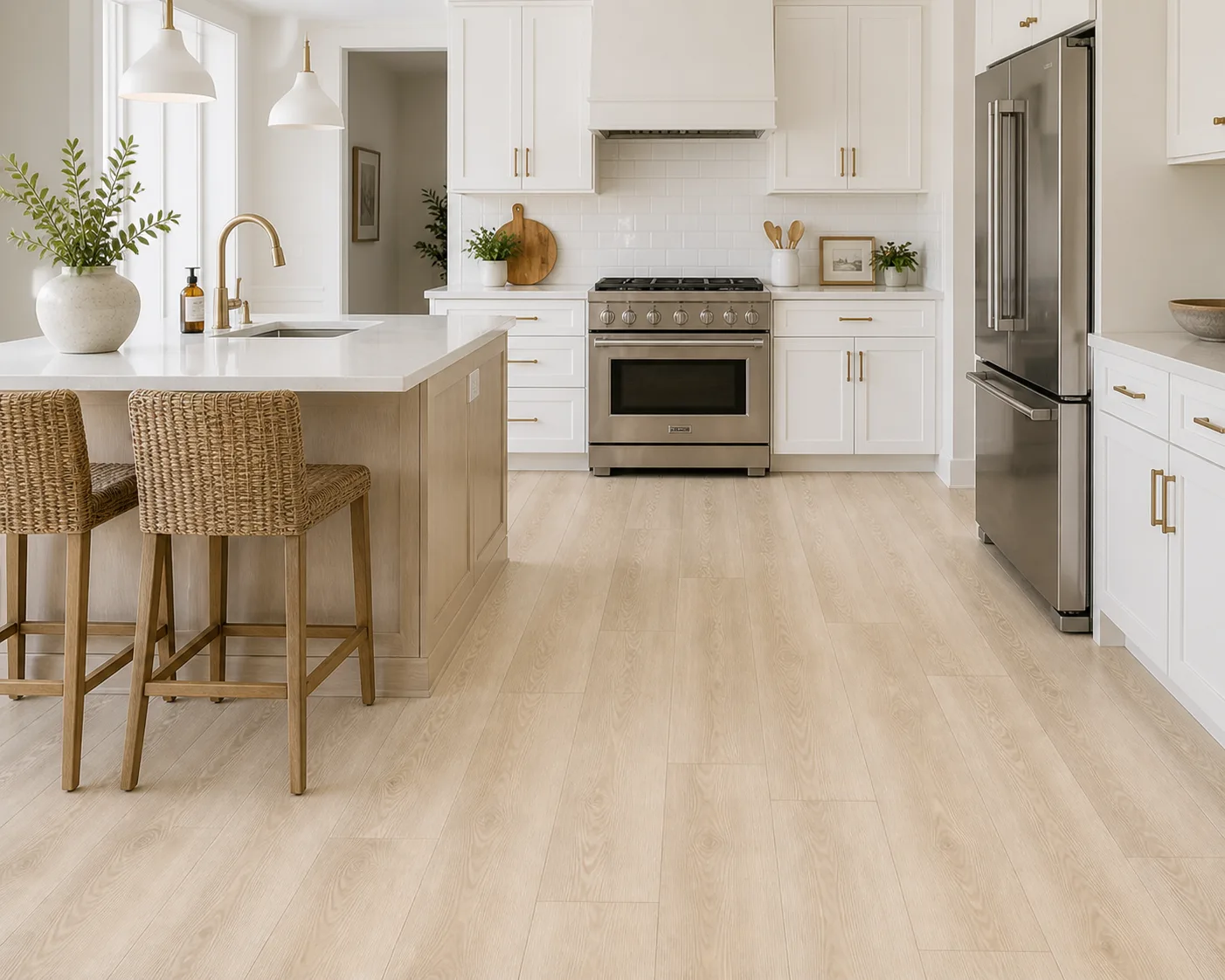
Low Price Guarantee
We'll beat any written flooring quote — guaranteed.

When it comes to upgrading your floors in the Grand Canyon State, the question isn’t just about color, texture, or price.
It’s “Laminate or LVP?” — and the answer isn’t as obvious as it seems.
At first glance, laminate flooring and luxury vinyl plank (LVP) may look nearly identical.
But under the surface, these materials are built differently — and those differences matter a lot in Arizona’s climate.
When it comes to upgrading your floors in the Grand Canyon State, the question isn’t just about color, texture, or price.
It’s “Laminate or LVP?” — and the answer isn’t as obvious as it seems.
At first glance, laminate flooring and luxury vinyl plank (LVP) may look nearly identical.
But under the surface, these materials are built differently — and those differences matter a lot in Arizona’s climate.
We'll beat any written flooring quote — guaranteed.

Built for muddy paws, sticky hands, and everyday spills.
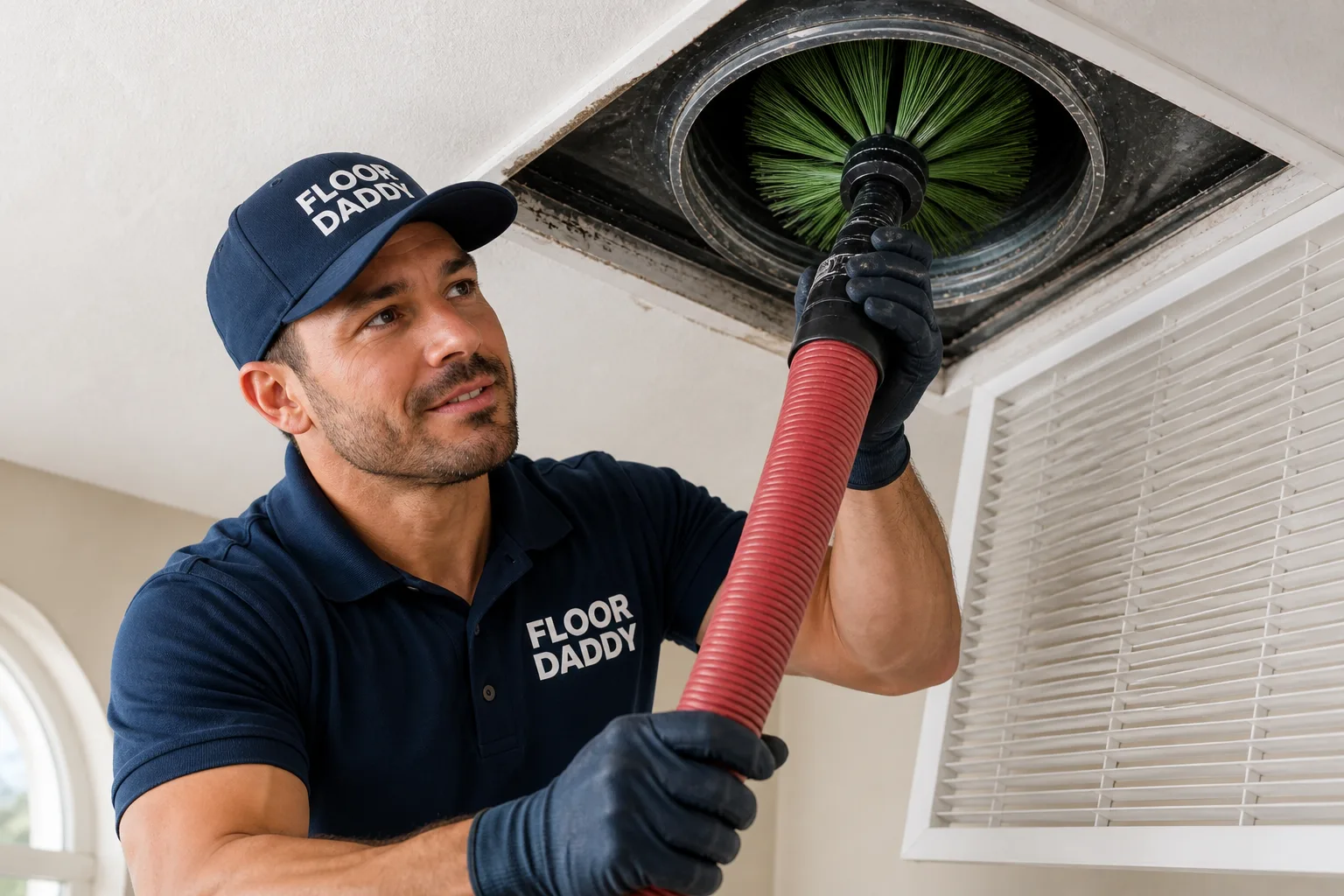
Cleaner air, on us, with qualifying flooring purchases.
*With qualifying purchase. Offers may not be combined. See Floor Daddy for details.

Laminate is a multi-layer synthetic product, typically composed of:
A core layer made from high-density fiberboard (HDF) or medium-density fiberboard (MDF)
A photographic layer that mimics real wood or stone
A protective wear layer that guards against scratches and dents
Laminate has come a long way over the past two decades. Modern versions offer realistic textures, more durability, and improved resistance to fading.
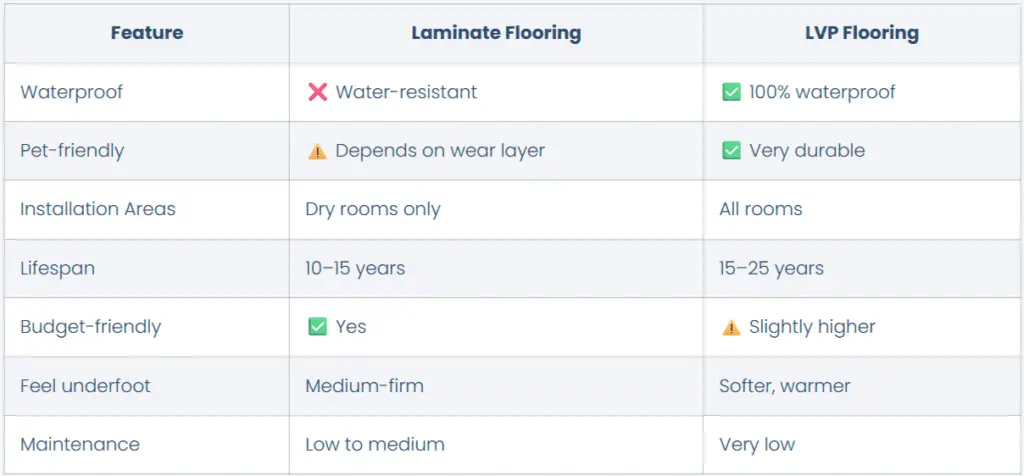
But, here’s the catch: laminate is water-resistant—not waterproof. If water seeps into the seams or underneath the boards, the fiberboard core can swell, warp, or even buckle.
Licensed and Bonded Installation Professionals 🏆
LVP is a composite flooring product made from PVC (polyvinyl chloride). Most modern LVPs feature a rigid core, such as stone plastic composite (SPC) or wood plastic composite (WPC), offering excellent dimensional stability.
Here’s what makes LVP a standout:
100% waterproof — it can handle spills, pet accidents, and mopping with ease
Durable and scratch-resistant
Quiet underfoot and often softer than tile
Click-lock installation makes it DIY-friendly
If moisture control is a top concern, LVP has a clear edge.
Buy now and pay overtime! We offer several different financing programs.


Arizona is unique. While most U.S. regions battle humidity, Arizonans deal with desert dryness, dust, and sudden storms.
These environmental quirks present specific flooring challenges:
Moisture exposure from mopping, leaks, or laundry mishaps
Dry heat and direct sun, which can cause fading or expansion
Dust and grit, which can wear down surface finishes faster
This means flooring must be resilient, easy to clean, and adaptable to both dry and occasionally wet conditions.
Laminate can be an excellent choice for:
Bedrooms
Living rooms
Home offices
These spaces are generally dry, and the elegant wood-look aesthetic of laminate offers a cozy, stylish vibe. Because laminate tends to be more budget-friendly, it’s a smart solution when you’re flooring large, low-traffic areas.
But beware: keep it out of bathrooms, kitchens, and laundry rooms unless it’s labeled “waterproof laminate” (which is rare and still risky in Arizona).
If you’re flooring a space that sees moisture, messes, or heavy traffic, LVP is your hero:
Kitchens
Bathrooms
Laundry rooms
Entryways
Rental properties or pet-friendly homes
Thanks to its full waterproof nature, LVP won’t warp, swell, or peel when wet. It’s also great for open-concept homes where spills in one area could easily flow into another.
Our installation teams are licensed, insured, and screened regularly.

Flooring delivered
to your door.

Next day installation
is available.

We even help move
your furniture.

Choosing between laminate and LVP isn’t just about specs — it’s about how your flooring fits into your daily life.
Laminate flooring offers an affordable way to bring the warmth and look of real hardwood into bedrooms and living rooms.
It’s ideal for dry spaces where water exposure is minimal, and its rigid core gives a solid underfoot feel that many homeowners love.
On the other hand, LVP flooring is the unsung hero of high-traffic and high-moisture areas.
From bathroom splashes and laundry room leaks to kitchen spills and pet messes, LVP handles it all without flinching.
We bring large flooring samples to your home for free!
Price is always a factor.
Laminate flooring tends to be more affordable per square foot, especially for entry-level options. LVP, while slightly more expensive upfront, may save you money in the long run by avoiding water damage and costly repairs.
Here’s a design-friendly idea: use both laminate and LVP strategically throughout your home. Laminate in bedrooms and the living room can cut costs, while LVP in bathrooms, kitchens, and laundry rooms ensures protection against moisture.
With seamless transitions and matching tones available in many flooring lines, your home can look cohesive while maximizing performance room by room.
Ultimately, choosing between laminate and LVP in Arizona depends on:
Your lifestyle (kids, pets, spills?)
Your budget
The room type
Your design preferences
At Floor Daddy, we understand Arizona’s climate inside and out.
That’s why we offer side-by-side product comparisons, expert advice, and in-home consultations to help you choose the flooring that works best for your space, your needs, and your budget.
Choosing between laminate and LVP doesn’t have to be overwhelming. Book a FREE in-home consultation with Floor Daddy and let our experts bring the showroom to you.
✅ Compare real samples in your space
✅ Get personalized recommendations
✅ No pressure, no gimmicks — just great floors!


Yes, luxury vinyl plank (LVP) flooring is 100% waterproof. Unlike laminate, which is only water-resistant, LVP can withstand spills, mopping, and even pet accidents without swelling or warping, making it ideal for kitchens, bathrooms, and laundry rooms.
Absolutely! Laminate flooring works well in Arizona’s dry climate, especially in low-moisture areas like bedrooms, home offices, and living rooms. However, it’s best to avoid installing laminate in rooms that may experience water exposure.
LVP is generally better for pet owners. It’s waterproof, scratch-resistant, and more durable when it comes to paw traffic and occasional accidents. Laminate can still work, but only if it has a strong wear layer and is kept dry.
LVP flooring typically has a longer lifespan, ranging from 15 to 25 years, depending on the quality. Laminate usually lasts about 10 to 15 years. Proper care and installation will also affect longevity.
Yes, modern LVP has incredibly realistic wood and stone visuals, often with embossed textures that mimic grain patterns. It’s a popular choice for homeowners who want the look of hardwood with more durability.
In most cases, yes. Laminate flooring is usually more budget-friendly upfront. However, LVP can offer more value in the long run due to its waterproof properties and longer lifespan in moisture-prone areas.
Yes, many LVP products are designed for floating installations and can be laid over existing floors like tile or concrete, provided the surface is clean, dry, and level. This can save time and reduce labor costs.
Not typically. Laminate flooring can be damaged by water if it seeps into the seams. Even “water-resistant” laminate should be used cautiously in high-moisture zones. LVP is a safer and more durable choice for wet areas.
Laminate requires light sweeping and damp mopping with minimal water. LVP is easier to maintain — you can mop it regularly without worry. Both should be protected from abrasive cleaners and furniture scratches.
Both laminate and LVP can work well in Arizona, depending on the room. Laminate is ideal for dry areas, while LVP offers more flexibility across your entire home thanks to its waterproof and heat-tolerant nature.