
ClickCease

🎉60 Months of 0% Financing — that’s FIVE YEARS, INTEREST-FREE!*

🌵 Arizona's Vinyl Plank Experts

Vinyl Plank Flooring Buyer's Guide

Everything Arizona homeowners need to know about LVP, WPC, and SPC — from choosing the right core for our extreme climate to getting accurate pricing and avoiding costly mistakes.
📞 (602) 833-2536
Local Arizona experts  ·  Free in-home samples
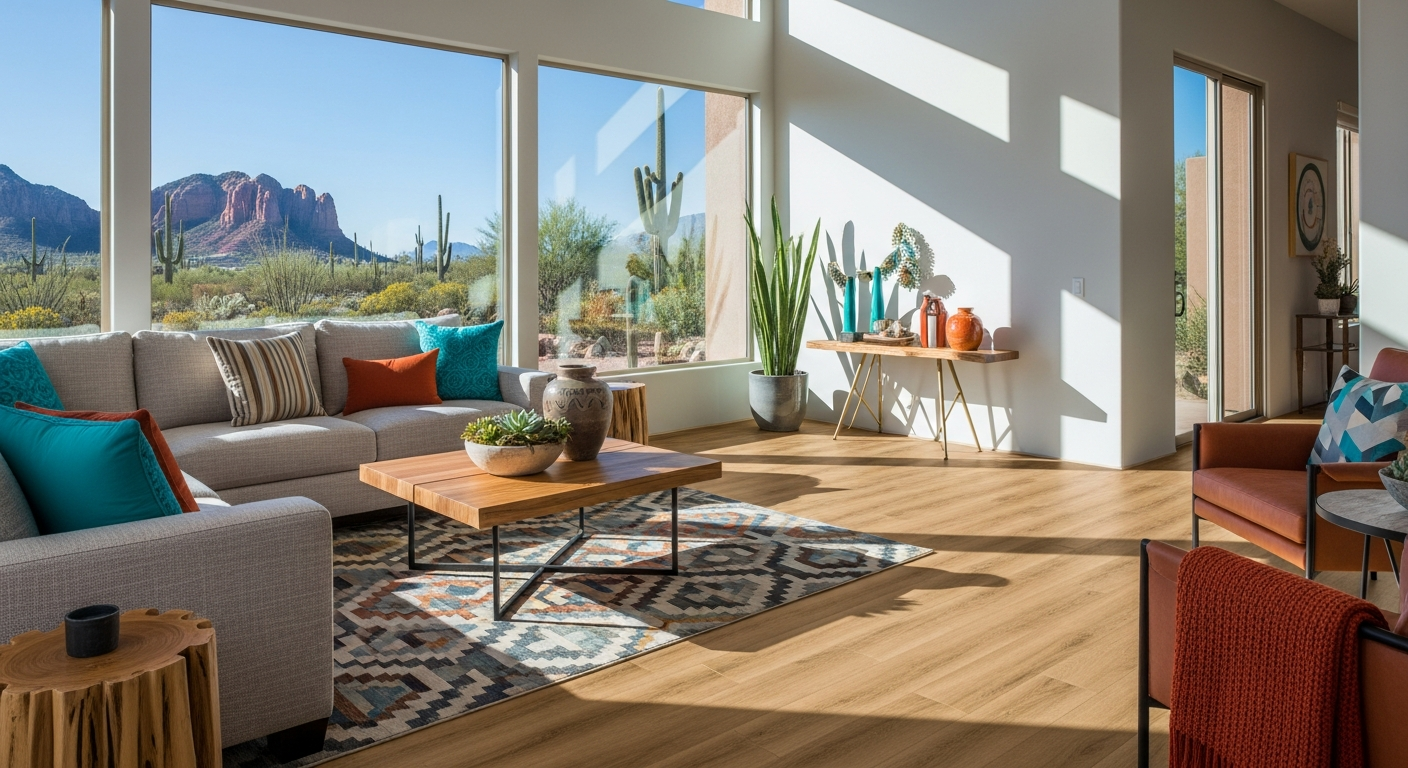
Beautiful luxury vinyl plank flooring in an Arizona living room
100% Waterproof
AZ Climate Ready
Pet Friendly

Quick Answer

Is Vinyl Plank Flooring Worth It in Arizona?

💧
Waterproof
100% Waterproof Core
🌡️
AZ Climate
SPC handles 110°F+
🐾
Pet Friendly
Scratch & stain resistant
💰
Installed Cost
$3–$12/sq ft
🦷
Durability
15–25 year lifespan
🪵
Looks Like
Real hardwood or stone

Is Vinyl Plank Flooring Right for You?

Vinyl plank has surged to become America's most popular flooring — for good reason. But it's not perfect for every situation. Here's the honest breakdown.

FactorVinyl Plank (LVP/SPC)HardwoodTile (Porcelain)Laminate
Waterproof✓ 100%✗ Will warp✓ 100%✗ Swells with moisture
Arizona Heat Stability✓ SPC excellent / WPC good✗ Gaps & warps✓ Excellent✗ Poor in extreme heat
Installed Cost (AZ avg)$3–$12/sq ft$8–$18/sq ft$4–$14/sq ft$3–$8/sq ft
Comfort Underfoot✓ Warmer than tile✓ Warm✗ Cold, hard✓ Similar to LVP
Lifespan15–25 years30–100 years25–50 years10–20 years
Pet Resistance✓ Excellent (20 mil+)✗ Scratches easily✓ Excellent✗ Scratches show
DIY Friendly✓ Click-lock easy✗ Nail-down difficult✗ Requires skill/tools✓ Click-lock, but no wet areas
Refinish Later✗ Cannot refinish✓ Can sand & refinish✗ Cannot refinish✗ Cannot refinish
Bottom line: Vinyl plank wins on waterproofing, pet-friendliness, and value in Arizona's climate. If you want floors that last 30+ years and can be refinished, real hardwood is worth the premium. For modern, low-maintenance, budget-smart Arizona living — quality LVP or SPC is hard to beat.

Best Vinyl Plank for Arizona Homes

Arizona's climate is unlike any other in the continental US. Here's what actually matters when choosing vinyl plank for Phoenix, Scottsdale, Tempe, or anywhere in the Valley.

Arizona ChallengeWhat Can Go WrongThe Solution
Extreme Heat (110°F+ summers)LVP can expand, gap, or warp if the subfloor heats beyond 85°F — common in south-facing rooms with dark floorsChoose SPC (Stone Plastic Composite) core — it has a 5°–10° higher thermal stability threshold than WPC
South-Facing Rooms & Direct UVUV rays fade wear layers over time, especially in rooms with large windows or glass doorsSpecify UV-resistant wear layer and install window film on sun-direct glass
Temperature Swings (AC vs Outside)Large planks expand and contract with indoor/outdoor temp swings — gaps appear at seamsLeave proper expansion gaps (1/4" perimeter), never glue floating planks, acclimate 48hrs before install
Dusty/Sandy Desert EnvironmentGrit tracked in from outside acts like sandpaper on thin wear layers20 mil wear layer minimum, door mats at every entry, and sweep frequently
Low Humidity (10–20% dry season)Wood-core products (laminate, hardwood) shrink in extreme dryness; LVP is unaffectedVinyl plank's plastic core doesn't react to humidity changes — advantage over hardwood and laminate
Monsoon Season MoistureSudden humidity spikes in July–September; bathroom/laundry overflow risksSPC or WPC handles moisture well — ensure proper drainage and seal plank edges in wet rooms
🌵 Floor Daddy's Arizona Recommendation
For Arizona homes, we consistently recommend SPC (Stone Plastic Composite) vinyl plank as the baseline. SPC's rigid stone-plastic core doesn't flex with temperature changes the way WPC does — meaning your floors stay flat and tight year-round, even in that brutal July when your AC is working overtime. For comfort-priority rooms (bedrooms, playrooms), WPC is acceptable with proper acclimation. For anywhere with direct sun, significant temp swings, or high foot traffic — SPC is the right call.
Pro Tip: When reviewing vinyl plank specs, look for a stated temperature range in the product data sheet. Quality SPC should be rated stable from 32°F to 104°F+ (some up to 140°F subfloor temp). Avoid any LVP product that doesn't list temperature stability specs — that's a quality red flag.
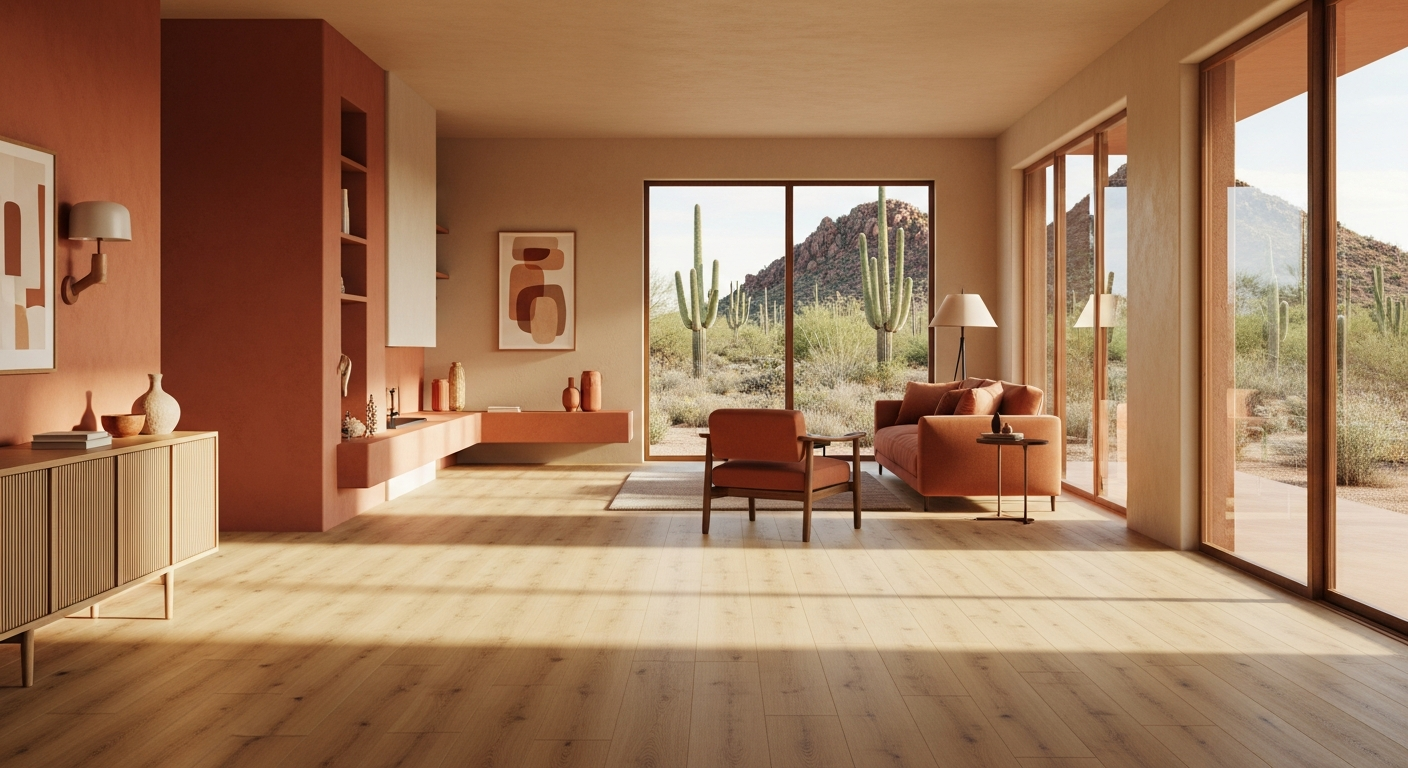
Beautiful Arizona living room with luxury vinyl plank SPC flooring in warm oak tones and large desert-view windows

LVP Types Explained: LVP, LVT, WPC & SPC

Not all vinyl plank is the same. Understanding the four core types helps you pick the right product — not just the right look.
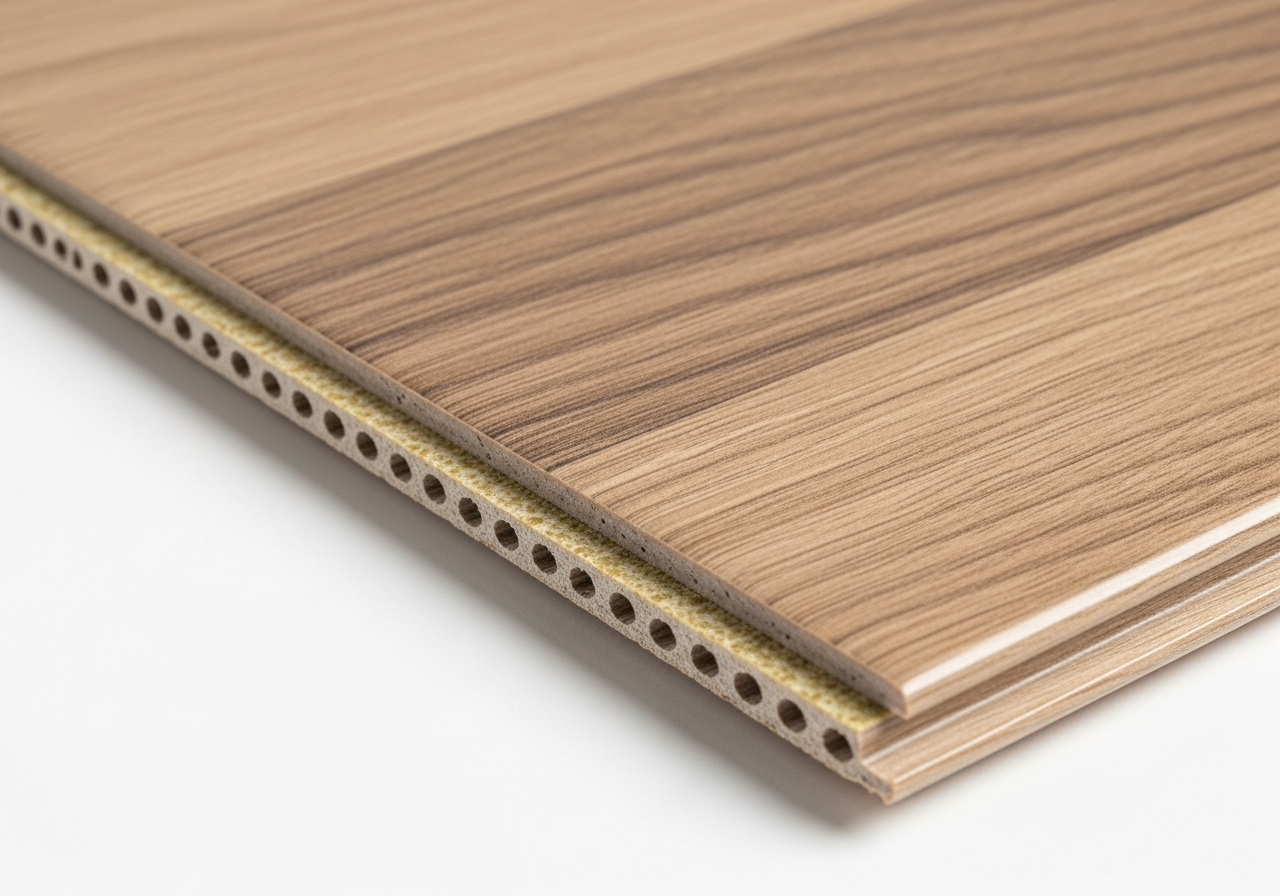
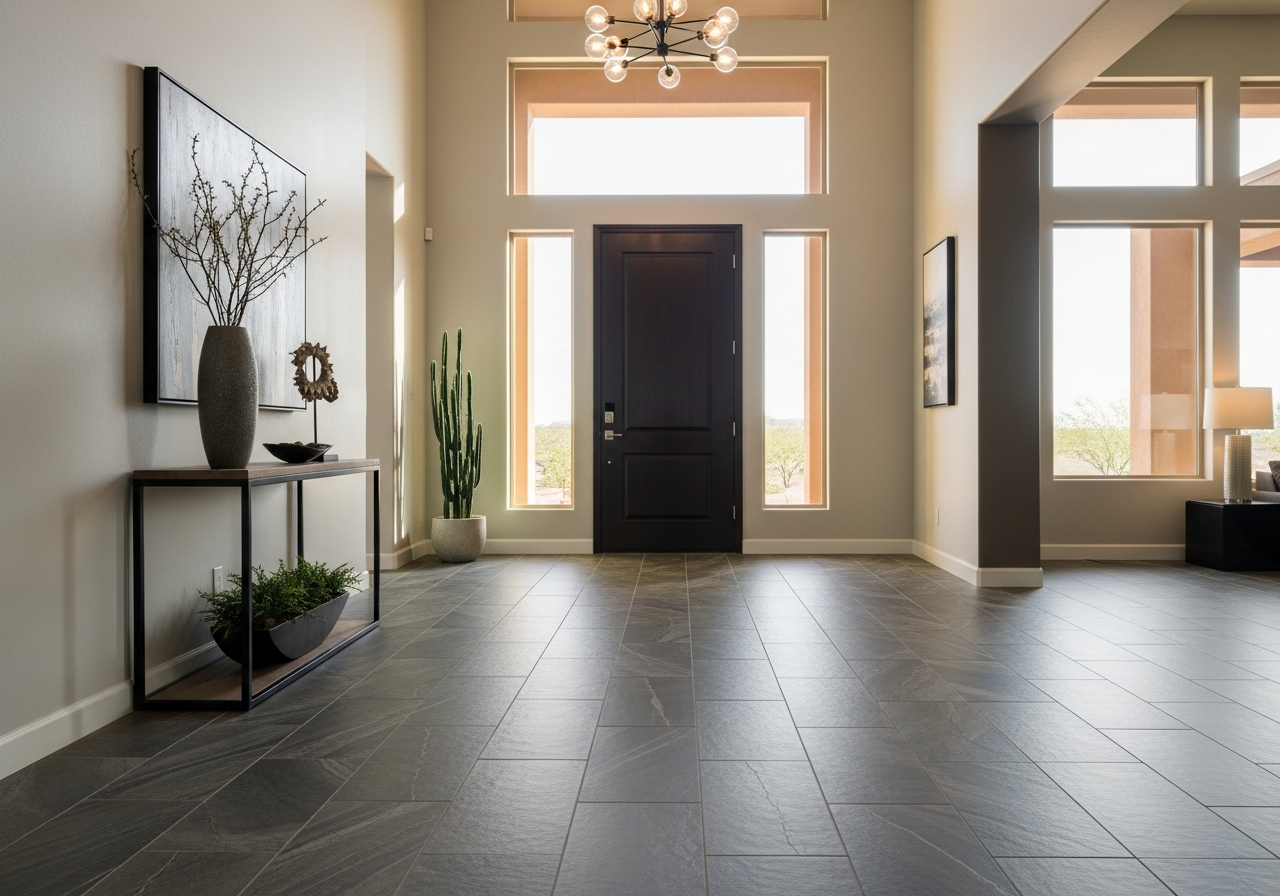
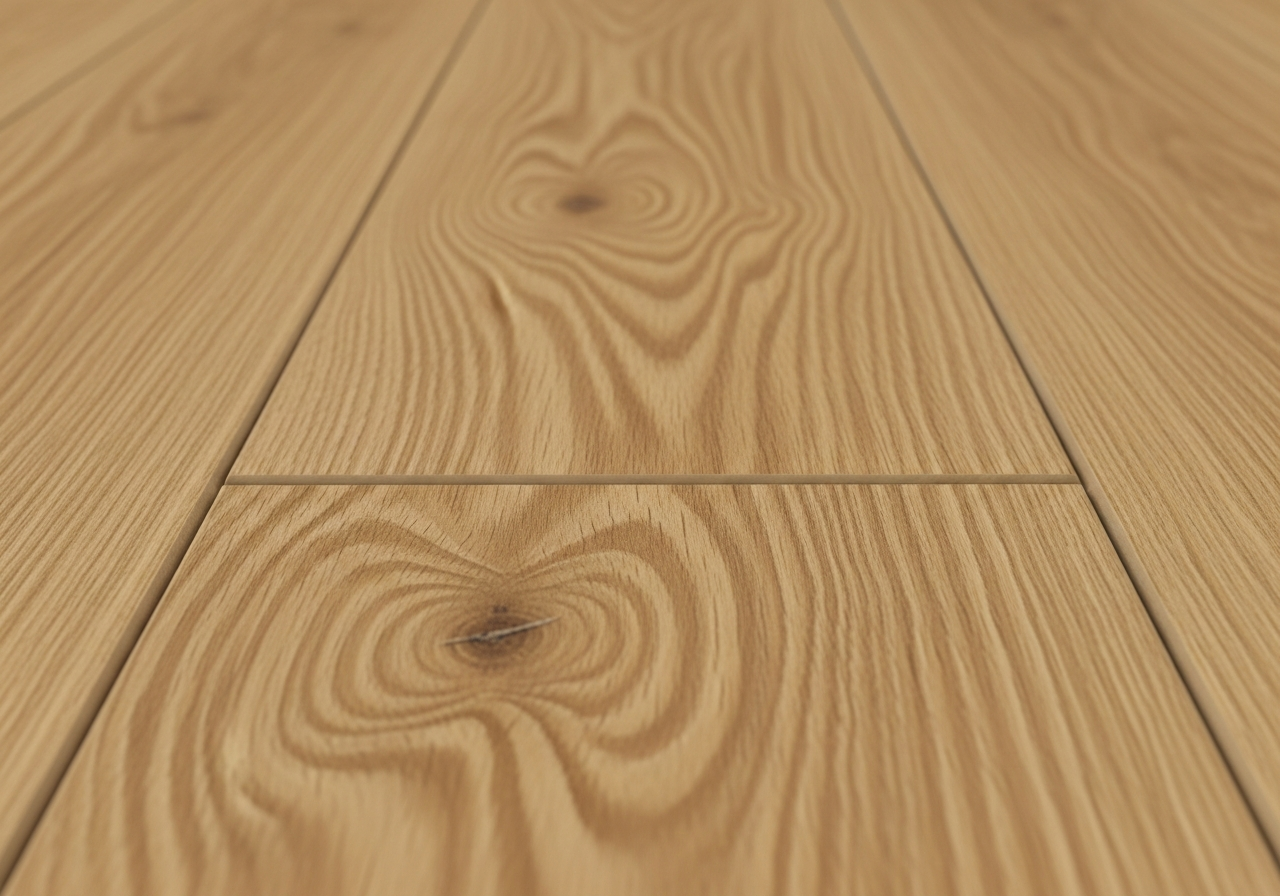
Luxury vinyl plank LVP flooring close-up showing multi-layer construction
LVP — Luxury Vinyl Plank
The classic. A flexible vinyl core with a printed wood-look layer and protective wear layer. The most affordable vinyl plank option.
  • Core:Flexible vinyl composite
  • Thickness:2mm–6mm
  • Wear Layer:6–20 mil
  • Waterproof:Yes
  • Temp Stability:Moderate — avoid extreme heat zones
  • Best For:Bedrooms, light-traffic areas, budgets
Luxury vinyl tile LVT stone look flooring installed in a modern foyer
LVT — Luxury Vinyl Tile
Stone or tile aesthetic in a vinyl format. Same waterproof vinyl construction as LVP, shaped to mimic stone, slate, marble, or ceramic.
  • Core:Flexible or rigid vinyl
  • Thickness:2mm–6mm
  • Wear Layer:12–20 mil
  • Waterproof:Yes
  • Temp Stability:Moderate
  • Best For:Foyers, kitchens, stone-look rooms
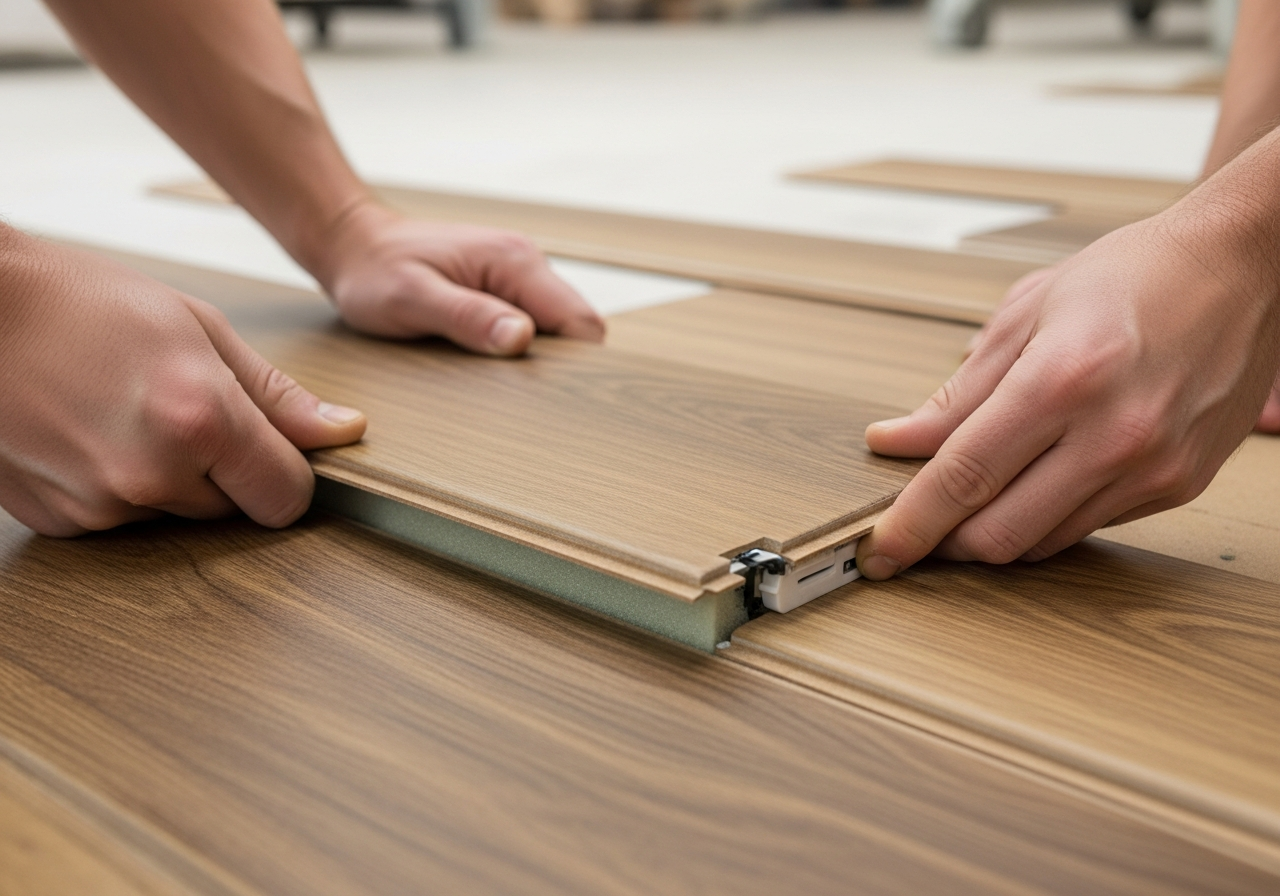
WPC wood plastic composite vinyl plank click-lock installation showing foam core
WPC — Wood Plastic Composite
A thicker, foam-enhanced vinyl plank with a foamed wood-plastic composite core. Softer and quieter underfoot than SPC.
  • Core:Foamed wood-plastic composite
  • Thickness:5mm–8mm
  • Wear Layer:12–28 mil
  • Waterproof:Yes
  • Temp Stability:Good — some warp risk in extreme AZ heat
  • Best For:Bedrooms, playrooms, comfort-first spaces
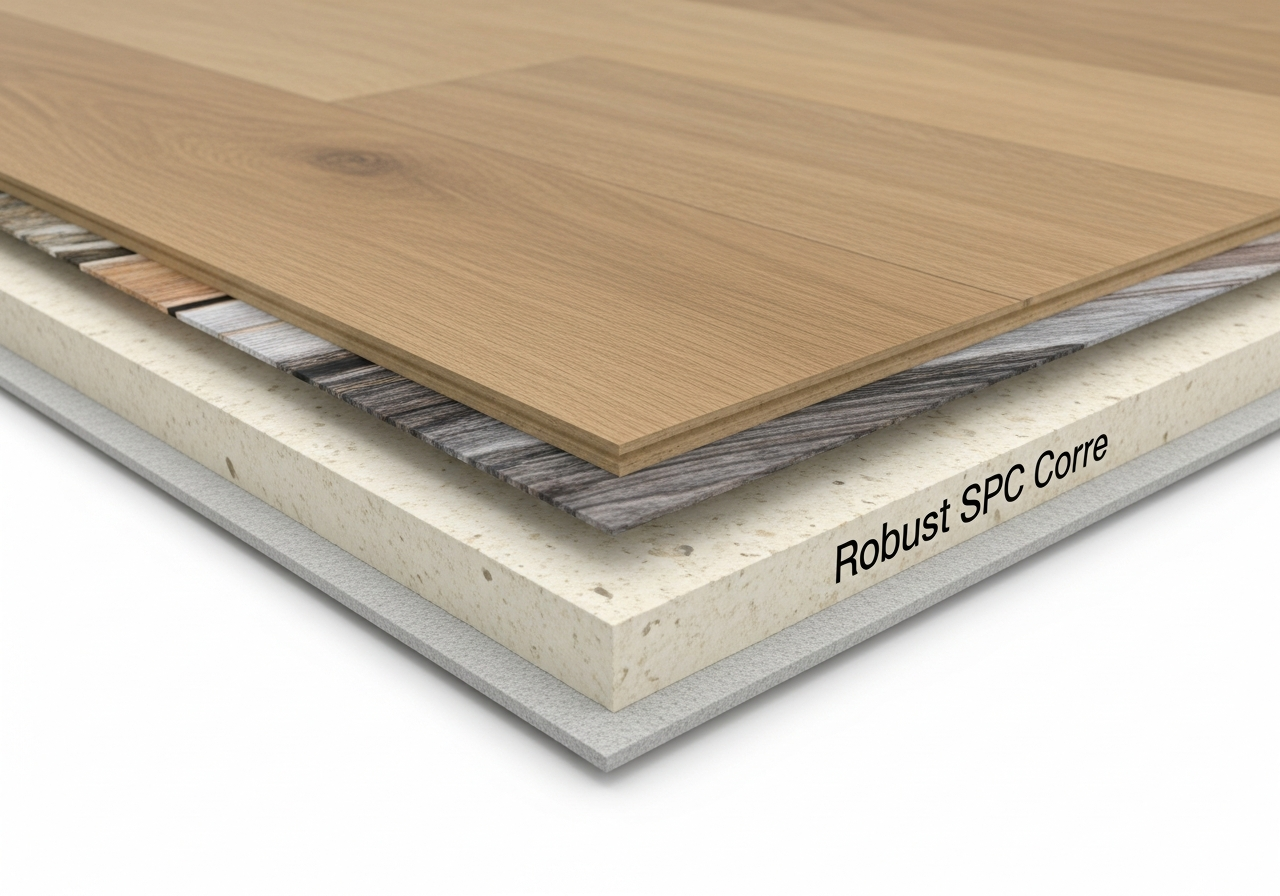
SPC stone plastic composite vinyl plank showing rigid limestone core cross-section
SPC — Stone Plastic Composite
The most rigid and durable vinyl plank. Limestone-filled core provides superior dimensional stability — won't warp in Arizona heat.
  • Core:Rigid limestone-plastic composite
  • Thickness:4mm–8mm
  • Wear Layer:12–40 mil
  • Waterproof:Yes
  • Temp Stability:Excellent — best for Arizona
  • Best For:High traffic, AZ climate, wet areas, pets

Wear Layer Thickness Guide

6 mil
Entry Level
Guest rooms only
12 mil
Standard
Light residential
20 mil
Recommended
Most homes, pets, kids
28+ mil
Heavy Duty
High traffic, rentals
40+ mil
Commercial
Offices, retail, extreme use
🟢 Rule of Thumb — Wear Layer
12 mil: Light rooms, guest bedrooms, dry areas only
20 mil: Standard for any home with pets, kids, or regular traffic
28+ mil: High-traffic zones, rentals, and commercial spaces
Never go below 20 mil in main living areas — savings are cancelled by faster replacement
🧠
Not sure which LVP type fits your home?
Answer 6 quick questions in our LVP Type Quiz below and get a personalized recommendation.

Which Vinyl Plank Type Is Right for Your Home?

Answer 6 quick questions and we'll match you to the right LVP, LVT, WPC, or SPC product.

LVP Type Finder
Takes about 30 seconds — no email required.

Best Vinyl Plank Flooring by Priority

Different households have different needs. Here's our top recommendation for each scenario — without the sales pitch.

Best for Pet Owners
SPC — 20 mil Wear Layer
Dog nails, cat claws, and pet accidents are no match for SPC's rigid core and thick wear layer. Won't scratch easily, won't warp from moisture, and cleans up fast.
🐾 Pets OK
Best for Budget
Click-Lock LVP — 12–20 mil
Basic LVP starts at $1.50–$2.50/sq ft and can be DIY-installed, dropping total cost significantly. Best for guest rooms, offices, and dry low-traffic areas.
💰 $1.50–$4 installed
Best for Families with Kids
WPC — Comfort Core
WPC's foam-enhanced core is softer when kids fall or play on the floor. Quieter than SPC and warmer than tile. Waterproof for juice spills and crayon incidents.
👨‍👩‍👧 Kid Friendly
Best for Rental Properties
Commercial-Grade SPC — 28 mil
Rental properties need floors that can take abuse, clean easily between tenants, and look good for years. Commercial SPC with 28 mil wear layer is the investment that pays off.
🏘️ Rental Ready
Best for Arizona Climate
SPC — Rigid Limestone Core
SPC's stone-plastic composite core won't flex, warp, or gap in Arizona's extreme temperature swings. The single most important factor for Arizona floors.
🌵 AZ Approved
Best for Aesthetics
Premium Wood-Look LVP — HD Print
High-definition embossed-in-register printing creates realistic grain texture that mirrors real oak, hickory, or walnut. Visitors won't know it's vinyl.
✨ Showroom Look
Best DIY Project
Click-Lock LVP — 5" or 7" Width
Click-lock vinyl plank installs without glue or nails — just snap planks together. Mid-width (5"–7") is the easiest format for straight or brick-offset installs.
🔨 DIY Friendly
Best for High Traffic
SPC — 20–40 mil Wear Layer
Entryways, hallways, and open-plan living areas with constant foot traffic need a wear layer that won't show scratches, scuffs, or heel marks over time.
🚶 High Traffic
🏠
Tell us about your specific room
Our Room Plank Selector below matches you to the right type, wear layer, and install method for your exact situation.

Which Vinyl Plank Is Best for Your Room?

Tell us about the room and we'll recommend the right product type, wear layer, and install approach.

Room Plank Selector
Fill in all fields for the most accurate recommendation.
🎉 Free In-Home Consultation — No Obligation

See Full-Size Vinyl Plank Samples in Your Home

We bring the samples to you so you can see how they look in your actual lighting before you spend a dollar. No pressure. No commitment.

Call (602) 833-2536

Vinyl Plank Flooring Cost Guide

Arizona pricing as of 2025–2026. Costs vary by product tier, room complexity, and subfloor condition.

Material Cost (per sq ft)
TierProduct TypeCost Range
BudgetBasic LVP (6–12 mil)$1.00–$2.50
Mid-RangeLVP/WPC (20 mil)$2.50–$4.50
PremiumSPC (20–28 mil)$3.50–$6.00
LuxurySPC/WPC (28–40 mil)$5.00–$9.00+
Labor Cost (per sq ft — Arizona)
Job TypeLabor Range
Click-Lock Floating Install$1.50–$2.50
Glue-Down Install$2.00–$3.50
Old Floor Removal$0.75–$1.50 add-on
Subfloor Leveling$1.00–$4.00 add-on
Stair Nosing & Trim$60–$120 per stair

Arizona Project Cost Estimates (Fully Installed)

ProjectSq FtBudget (LVP)Mid-Range (SPC)Premium (SPC+)
Master Bedroom200 sq ft$600–$900$1,000–$1,400$1,400–$2,000+
Open Living / Kitchen500 sq ft$1,500–$2,200$2,500–$3,500$3,500–$5,000+
Full Home (1,500 sq ft)1,500 sq ft$4,500–$6,500$7,500–$10,500$10,500–$15,000+
Full Home (2,000 sq ft)2,000 sq ft$6,000–$9,000$10,000–$14,000$14,000–$20,000+
🧮 Vinyl Plank Cost Calculator
💳
0% Interest Financing Available
📅
Same-As-Cash Options
🤝
No Pre-Payment Penalty
Fast Approval, No Pressure
Why Arizona Homeowners Choose Floor Daddy
🚐
Free In-Home Visit
📦
Full-Size Samples
🔨
Licensed Installation
💳
0% Financing
Lifetime Labor Warranty
Serving the entire Phoenix metro · (602) 833-2536

Plank Size & Layout Patterns

The plank dimensions and layout pattern you choose affect how large your room looks, how much waste you generate, and how realistic the wood appearance is.

Plank Width Guide

WidthBest Room SizeVisual EffectNotes
4"–5" NarrowSmall–MediumTraditional, classic wood lookHides width irregularities, easier cuts around obstacles
6"–7" StandardMedium–LargeModern, balanced proportionMost popular width — works in any room
8"–9" Wide PlankLarge rooms, open plansDramatic, fewer seams, open feelRequires flatter subfloor (less forgiving)
12" Extra WideLarge format, modern aestheticContemporary, nearly seamless lookBest laid parallel to longest wall or natural light source
Side by side comparison of narrow, standard, and wide vinyl plank flooring widths showing visual differences

Layout Pattern Comparison

PatternWaste %Best ForSkill LevelCost Impact
Straight Lay (no offset)5–7%Casual, modern rooms; long narrow spacesBeginnerLowest
Brick Offset (1/3 or 1/2)7–10%Most rooms — natural, traditional lookBeginnerLow
Diagonal (45°)10–15%Small rooms, hallways, entryways — makes space feel largerIntermediateModerate
Herringbone15–20%Formal dining rooms, primary bedrooms, high-end installsAdvanced / ProHigher
Chevron15–20%Contemporary statement rooms, large open plansProfessionalHighest
🟢 Rule of Thumb — Layout Orientation
Run planks parallel to the longest wall for the most natural appearance
Orient toward the main source of natural light whenever possible
In hallways and narrow rooms, diagonal or lengthwise lay visually widens the space
Budget 10–12% extra material for offcuts, regardless of pattern
📐
Not sure which layout pattern fits your room?
Use our Layout Pattern Selector below — tell us your room type, size, and design style and we'll give you a specific recommendation.

Layout Pattern Selector

Tell us about your room and design goals and we'll suggest the ideal plank layout pattern.

Find Your Best Layout Pattern
Takes 30 seconds — no guessing required.

Vinyl Plank Installation Realities

Vinyl plank is the most DIY-friendly hard flooring available — but there are critical subfloor and acclimation steps that many homeowners skip, leading to failures that void warranties.

Installation Methods

MethodBest ForDIY?
Click-Lock FloatingMost residential installs — floating over existing floorsYes ✓
Glue-DownHigh-traffic commercial, radiant heat floors, over concreteModerate
Loose-LayQuick installs, rental property short-termYes ✓
Peel-and-Stick (LVT)Basements, temporary, low-budget installsYes ✓

Subfloor Requirements

RequirementStandard
Flatness3/16" over 10 feet (fill low spots, sand high spots)
Moisture (Concrete)Test with moisture meter — must be under 85% RH or 8 lbs/1000sqft
StructuralNo bounce, no flex — floating vinyl won't fix a bouncy subfloor
Height (over existing)Check door clearances — typically max 1/2" addition
CleanlinessSweep and vacuum — grit under vinyl causes cracking wear layer over time
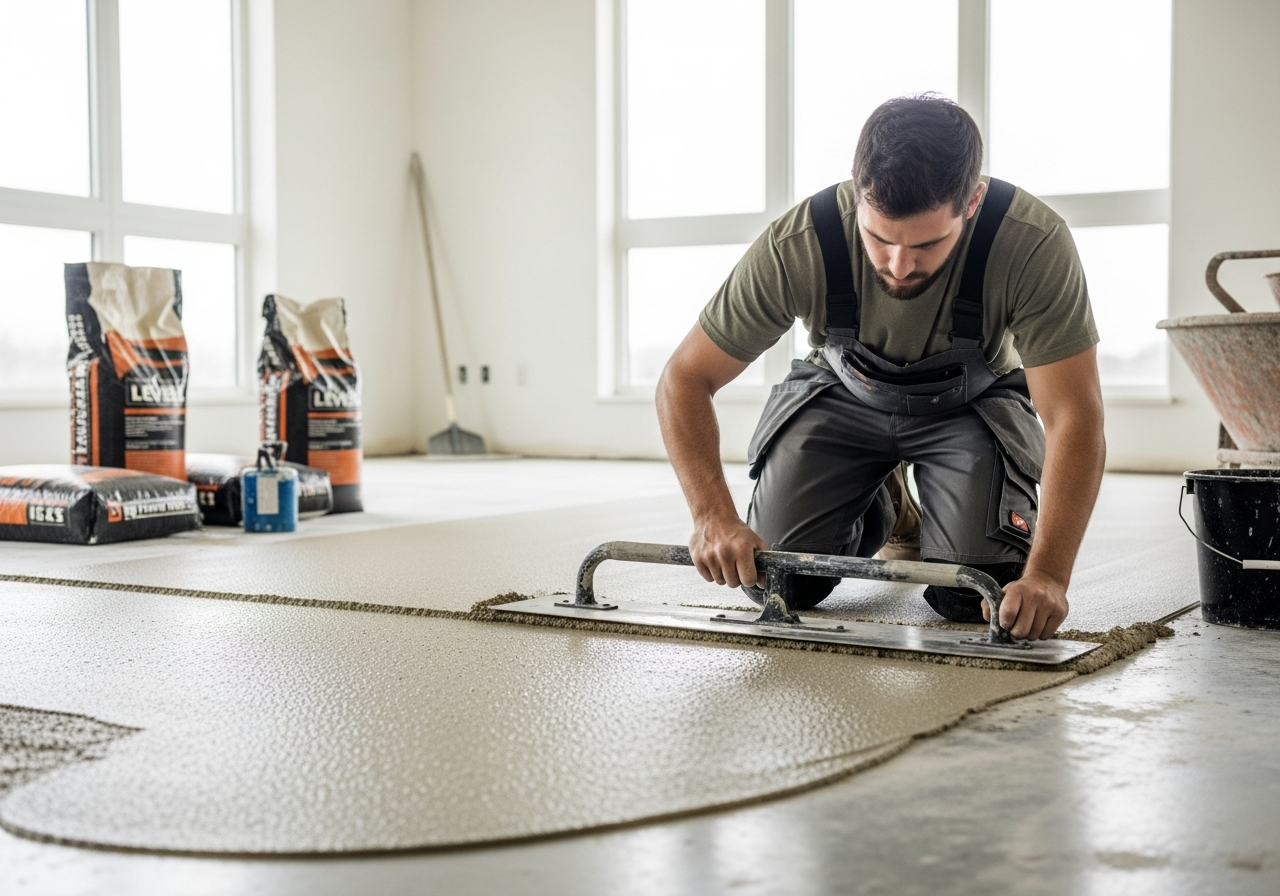
Professional flooring installer preparing and leveling a subfloor before vinyl plank installation
🌵 Arizona Acclimation Warning
In Arizona summer, vinyl plank from an air-conditioned warehouse to a non-climate-controlled home during installation can cause immediate expansion issues. Always acclimate planks in the installation room with AC running at your normal indoor temperature for 48 hours minimum before installation. Never install over a subfloor heated above 85°F — wait for cooler time of day or season.
The Most Common Install Mistake: Skipping subfloor prep. A floor that feels slightly wavy, has a few high spots, or has old adhesive residue will transmit those imperfections through the vinyl plank over time. Proper prep takes time but it's what separates a floor that looks great for 20 years from one that starts showing problems in 3.
🧮
Estimate your full installation cost — Use our Vinyl Plank Cost Calculator above to get a room-specific material and labor estimate before you call anyone.

SPC vs WPC: Which Core Is Right for Arizona?

This is the most important decision Arizona vinyl plank buyers face. Here's the complete comparison — without the sales spin.

FeatureSPC (Stone Plastic Composite)WPC (Wood Plastic Composite)Winner (for AZ)
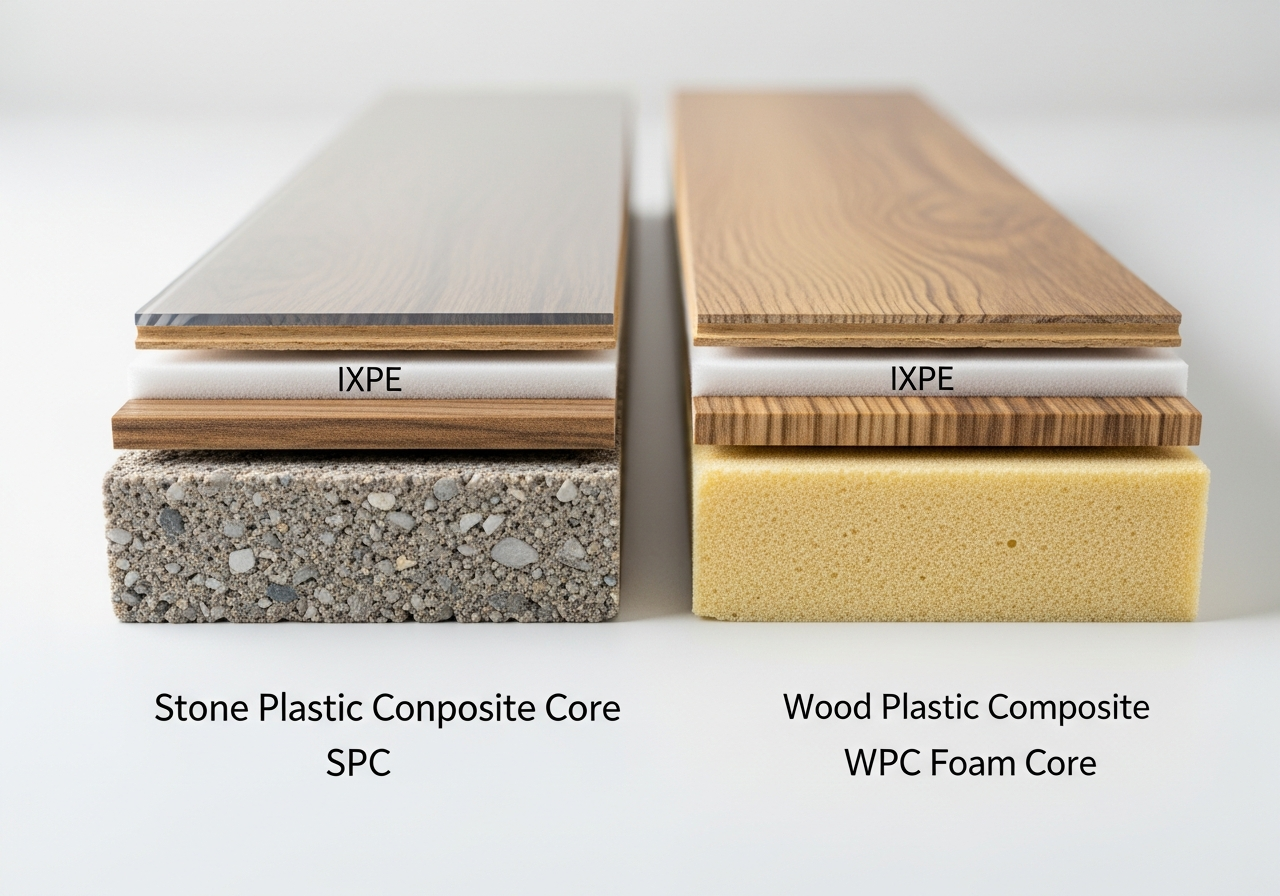
Core MaterialLimestone + PVC composite — rigid, denseFoamed wood-plastic composite — semi-rigidSPC
Temperature StabilityExcellent — handles extreme AZ heatGood — risk of warping in extreme heatSPC
Underfoot ComfortFirm — similar to tile feelSoft — foam core absorbs impactWPC
Sound DampeningGood with underlaymentExcellent — built-in sound controlWPC
Durability (Impact)Higher — denser core resists dentsModerate — softer core can dentSPC
Water Resistance100% waterproof100% waterproofTie
Price Range$3.50–$8/sq ft (materials)$2.50–$7/sq ft (materials)WPC (slightly lower)
Arizona Recommendation✓ Our top pick for most AZ homesGood for interior, comfort-priority roomsSPC overall
Cross-section comparison of SPC rigid limestone core versus WPC foam composite core vinyl plank flooring
🌵 Floor Daddy's Verdict
For Arizona homes, SPC is the default recommendation. The rigid limestone core simply doesn't care about 115°F summer days the way WPC can. That said, WPC is a perfectly solid choice for interior rooms that stay climate-controlled — master bedrooms, home offices, and playrooms where comfort is the priority. Where we'd never use WPC: garages, south-facing rooms with large windows, laundry rooms, or any space that gets direct heat.

Vinyl Plank vs Other Flooring Options

How does vinyl plank actually stack up against the alternatives? Here's the honest Arizona-specific comparison.

vs.Vinyl Plank WinsOther Flooring WinsArizona Verdict
VP vs HardwoodWaterproof, lower cost, pet-resistant, stable in AZ heatRefinishable, natural material, higher resale premiumLVP/SPC for practical AZ living; hardwood for high-end formal spaces
VP vs Porcelain TileWarmer/quieter underfoot, faster DIY install, softer surfaceLongevity (50+ years), cooler in summer, ideal wet areasBoth work well in AZ — tile for outdoor/wet, LVP for living areas
VP vs Laminate100% waterproof, handles AZ moisture and heat far betterSlightly better underfoot feel, some say more realistic textureLVP wins clearly — laminate and Arizona monsoons don't mix
VP vs CarpetEasier to clean, no allergens trapped, pet accidents don't soak inSoft landing, warmer in winter, lower material costLVP for families with pets and kids; carpet for master bedrooms only
VP vs Engineered HardwoodLower cost, fully waterproof, handles heat betterMore natural look, can be lightly sandedLVP for budget and waterproofing; engineered hardwood for premium look

Common Vinyl Plank Myths — Debunked

These misconceptions cost Arizona homeowners time and money. Here's the truth.

❌ Myth
"Vinyl flooring looks cheap and fake."
✅ Reality
Modern LVP with HD printing and embossed-in-register texture is nearly indistinguishable from real wood in photographs and in person. The gap-era vinyl of the 1980s is gone.
❌ Myth
"Vinyl plank can't handle Arizona heat."
✅ Reality
This is true of basic LVP — but SPC (Stone Plastic Composite) is specifically engineered for dimensional stability in extreme temperature environments. Floor Daddy recommends SPC for all AZ installs.
❌ Myth
"Vinyl doesn't add home value."
✅ Reality
Premium LVP and SPC are widely accepted by appraisers and buyers as desirable flooring. It photographs well, looks updated, and eliminates buyer objections that come with worn carpet or dated tile.
❌ Myth
"It's bad for indoor air quality."
✅ Reality
Low-quality vinyl can off-gas VOCs. However, GREENGUARD Gold and FloorScore certified products have been independently tested and meet strict indoor air quality standards. Ask for the certification before purchasing.
❌ Myth
"You can't put vinyl in bathrooms."
✅ Reality
Vinyl plank is 100% waterproof and one of the best bathroom flooring choices available — warmer underfoot than tile, faster to install, and fully resistant to the moisture that destroys laminate and hardwood.
❌ Myth
"It scratches too easily for pets."
✅ Reality
Entry-level 6–12 mil wear layers do scratch more easily. A 20 mil or thicker wear layer handles dog nails, cat claws, and heavy furniture well in normal household use. The key is wear layer thickness, not the product category.
💬 Talk to a Local Arizona Expert

Still Have Questions? We're Here.

Floor Daddy has installed vinyl plank flooring in thousands of Arizona homes. Get honest answers and a free quote — no pressure, no commission, no gimmicks.

📞 (602) 833-2536

Common Vinyl Plank Questions

The questions Arizona homeowners ask us most often — answered honestly.

  • The plank itself — the core and wear layer — is 100% waterproof. What can fail is the seam between planks if water sits for extended periods and works down through the tongue-and-groove joint. In bathrooms and laundry rooms, seal plank edges near tubs, showers, and appliances to prevent water from getting under the floor.
  • Basic LVP and WPC can warp or gap in extreme heat if the subfloor gets too hot (south-facing rooms, direct sun on dark floors). SPC (Stone Plastic Composite) is specifically engineered for dimensional stability and handles Arizona's 110°F+ temperatures far better. Floor Daddy strongly recommends SPC for Arizona homes, especially in sun-exposed rooms.
  • Yes, with conditions. The existing floor must be flat (no more than 3/16" over 10 feet), firmly secured, and not higher than what transitions allow at doors. Going over tile adds height — factor this into door clearances and transitions. Glue-down tile must be fully adhered with no loose pieces. Floating LVP works well over most existing hard floors.
  • 12 mil: Light residential use (guest rooms, low-traffic areas). 20 mil: Standard residential recommendation — pets, kids, everyday traffic. 28–40 mil: Heavy residential or light commercial — high-traffic entryways, short-term rental properties. Don't let retailers talk you into less than 20 mil for any main living area.
  • Many vinyl planks come with pre-attached underlayment — do not add a second layer or you'll void the warranty and risk an unstable floor. If your planks don't have it attached, a 1–2mm foam underlayment helps with sound, slight subfloor imperfections, and underfoot comfort. Never use cork underlayment under floating vinyl plank — it can cause movement and locking failures.
  • Click-lock LVP is one of the most DIY-friendly flooring options available. If you have a straight, flat subfloor, basic tools, and patience for the first row, most homeowners can install a room in a weekend. Complex patterns (herringbone, diagonal) and large open plans benefit from professional installation.
  • With a 20 mil or thicker wear layer, vinyl plank handles dog nails well in everyday use. Large, heavy dogs (80+ lbs) running frequently may show surface micro-scratches over time. Keep nails trimmed, use entry mats to trap grit, and choose a hand-scraped or textured surface that hides minor scratches better than a high-gloss finish.
  • Yes — quality LVP (8mm+, 20 mil wear layer) is now widely accepted by buyers and appraisers as a desirable, durable flooring choice. It photographs well, feels updated, and appeals to the large Arizona market of buyers who want low-maintenance flooring that handles the climate. Entry-level vinyl plank may not add significant value, but premium LVP or SPC typically returns 80–100% in resale scenarios.
  • Quality LVP with a 20 mil wear layer typically lasts 15–25 years in residential use with proper care. Commercial-grade SPC (28–40 mil) can last 25+ years. Factors that shorten lifespan: thin wear layer, excessive sun exposure without window film, sharp furniture legs without felt pads, and dragging heavy appliances.
  • Both mimic wood, but LVP has a plastic core that's 100% waterproof — laminate has an HDF wood-fiber core that swells and warps permanently when it gets wet. In Arizona's monsoon season and in kitchens, bathrooms, and laundry rooms, LVP is the clear choice. Laminate feels slightly more like real wood underfoot, but the waterproofing advantage of LVP makes it the smarter choice for most Arizona homes.

Before You Buy Vinyl Plank Flooring — Checklist

Choosing Your Product
  • SPC core confirmed for rooms with Arizona heat exposure
  • Wear layer is 20 mil minimum for main living areas
  • Wear layer is 28+ mil for rental property or high traffic
  • Product has FloorScore or GREENGUARD Gold certification
  • Plank thickness is 6mm+ for floating install over existing floor
  • Realistic texture (embossed-in-register) for best wood appearance
  • UV-resistant coating noted for sun-exposed rooms
Measuring & Planning
  • Room measured accurately (length × width + 10% waste minimum)
  • Herringbone/diagonal pattern adds 15–20% waste — budgeted
  • Checked door clearances for added floor height
  • Transition strips planned for doorways and flooring changes
  • Stair nosing ordered if project includes stairs
  • Layout direction decided (parallel to longest wall or light source)
  • Expansion gap (1/4") planned at all walls and vertical surfaces
Subfloor Preparation
  • Subfloor checked for flatness (3/16" over 10 ft)
  • Low spots filled with floor leveling compound
  • High spots sanded or ground down
  • Concrete slab moisture tested (under 85% RH or 8 lbs/1000sqft)
  • Existing floor confirmed to be flat, firmly secured, and clean
  • Old adhesive residue removed
  • Heating/cooling running at normal temps during and after install
Installation Day
  • Planks acclimated in the room for 48 hours before install
  • Room temperature between 65°F–80°F during installation
  • Underlayment NOT doubled if pre-attached underlayment is on planks
  • First row set along straightest, most visible wall
  • Planks staggered — end joints 6"+ apart between rows
  • Expansion gaps maintained at all walls
  • Tapping block used (never hammer directly on planks)

Our Final Recommendation for Arizona Homeowners

After years of installing vinyl plank across thousands of Valley homes, here's what we'd tell a family member shopping for new floors today.
🏆
Best Overall
SPC — 20 mil wear layer, 6mm+
💰
Best Value
LVP — 20 mil, click-lock, DIY install
🌡️
Best for AZ Heat
SPC — rigid limestone core
🐾
Best for Pets
SPC — 28 mil wear layer
🛏️
Best for Bedrooms
WPC — comfort core, 20 mil
🏠
Best for Rentals
Commercial SPC — 28–40 mil
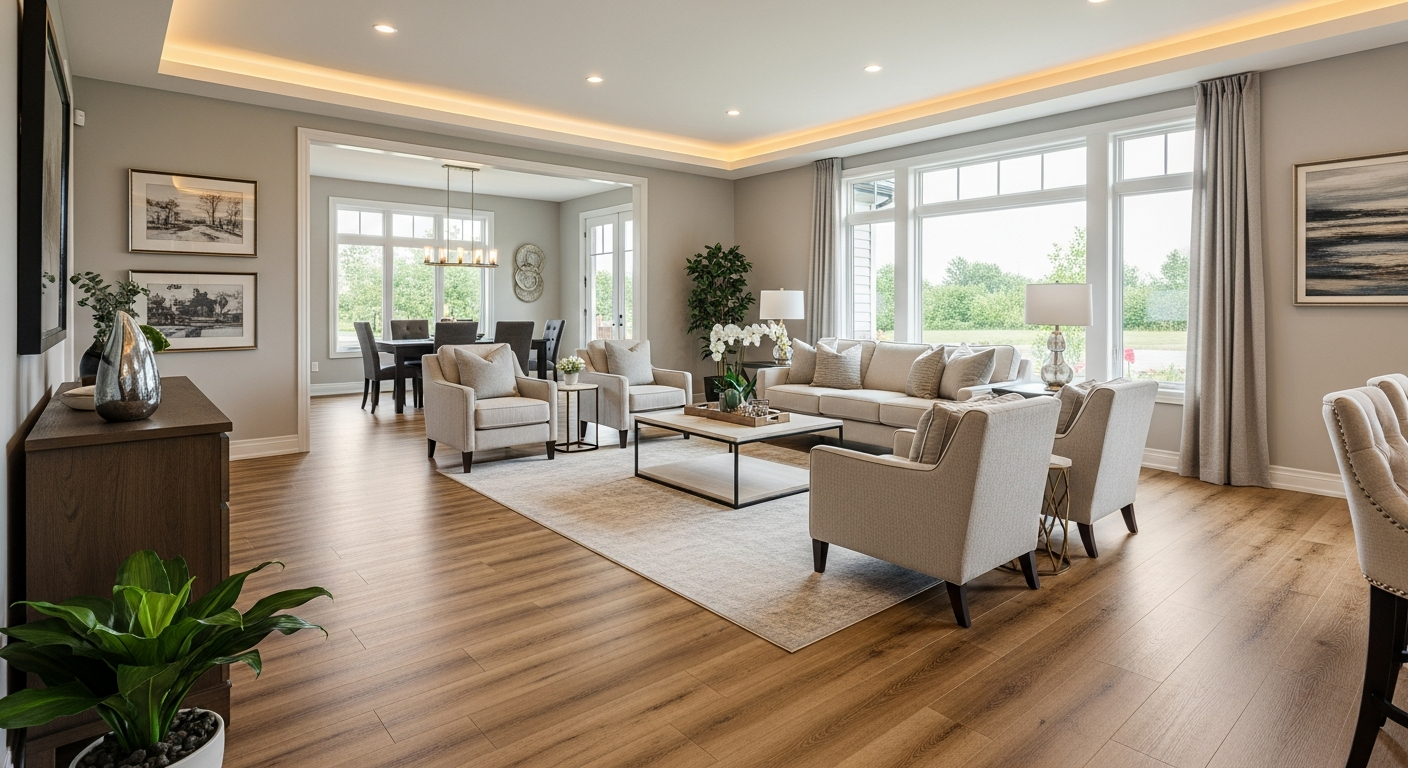
Wide angle beauty shot of a stunning open-plan home with luxury vinyl plank flooring throughout
The short answer: For most Arizona homes, SPC vinyl plank with a 20 mil+ wear layer is the right call. It handles our climate, survives pets and kids, looks like real wood, costs a fraction of hardwood, and will last 15–25 years with basic care. If you have comfort-priority rooms (bedrooms, playrooms), WPC is a solid alternative. If budget is the primary driver and the rooms are low-traffic and dry, basic LVP gets the job done.

One more thing: Don't shop by price per square foot alone. The wear layer thickness, core type, and subfloor prep matter more than the sticker price. A $3/sq ft SPC installed correctly will outlast a $5/sq ft LVP installed on a poorly prepped subfloor every time.
📞 Call (602) 833-2536

How It Works

Our Simple 3-Step Process

From first call to finished floor — no pressure, no surprises.
1

Step 1

Free In-Home Consultation

We bring full-size vinyl plank samples directly to your home so you can see exactly how they'll look in your lighting and with your furniture before deciding.

2

Step 2

Expert Guidance & Clear Pricing

Honest advice on LVP, WPC, or SPC selection, plus a detailed upfront estimate. No hidden fees, no upselling, no surprises.

3

Step 3

Professional Installation

Our in-house team handles everything — precise installation completed on your schedule with minimal disruption to your home.