
Hardwood floors add warmth, beauty, and long-term value to your home, but only if they’re cleaned the right way. Many homeowners unknowingly damage their wood floors by using too much water, harsh chemicals, or improper tools. The best way to clean hardwood floors is a combination of regular dry cleaning, gentle damp cleaning, and preventative care that protects the wood’s finish and structure.
Whether you have solid hardwood or engineered hardwood flooring, following the correct cleaning routine will keep your floors looking beautiful for decades.
Why Proper Hardwood Floor Cleaning Matters
Hardwood is a natural material that reacts to moisture, temperature changes, and abrasive dirt. Poor cleaning habits can lead to:
- Scratches and dullness
- Warping or swelling
- Finish breakdown
- Permanent discoloration
Unlike tile or vinyl, hardwood floors cannot handle excess water or harsh chemicals. Using the right cleaning methods protects both the wood and its protective finish.
Daily & Weekly Hardwood Floor Cleaning Routine
1. Sweep or Dust Mop Daily
The simplest and most effective way to clean hardwood floors is dry cleaning.
Best tools to use:
- Microfiber dust mop
- Soft-bristle broom
- Hardwood-safe vacuum (no beater bar)
Dust, sand, and pet hair act like sandpaper underfoot. Removing them daily prevents scratches and wear, especially in high-traffic areas.
2. Vacuum Weekly (Optional but Recommended)
Vacuuming once or twice a week helps remove debris from cracks and edges.
Important:
Use a vacuum designed for hardwood floors or turn off the rotating brush to avoid damage.
The Best Way to Damp Clean Hardwood Floors
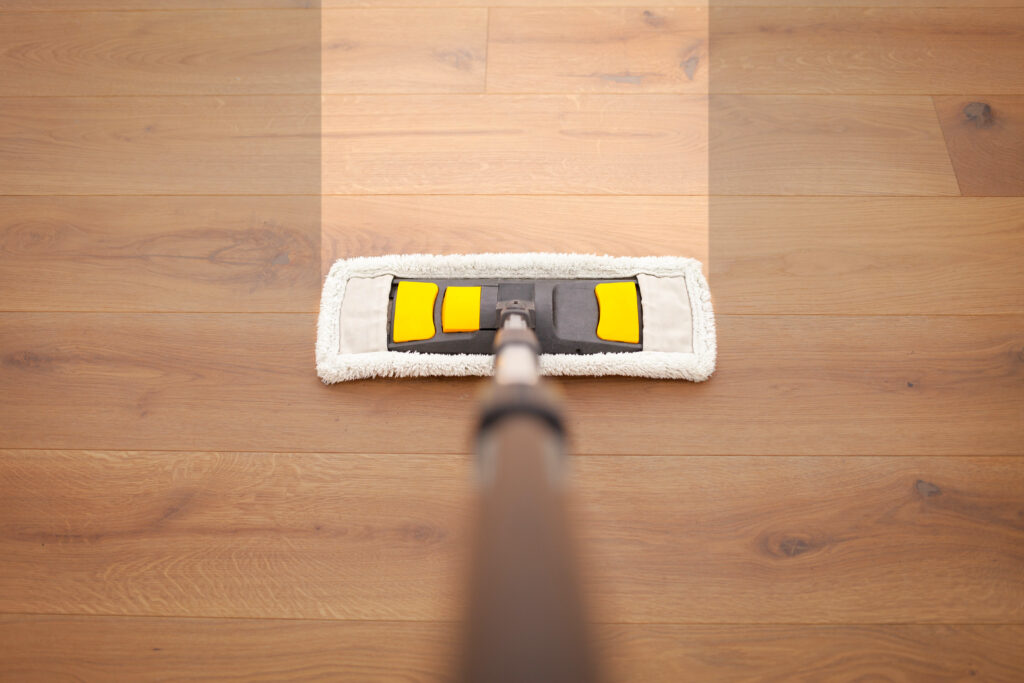
3. Use a Damp (Not Wet) Mop
Damp mopping should only be done as needed, usually once every 1–2 weeks.
How to do it correctly:
- Use a microfiber mop
- Lightly mist the floor or mop (never pour water directly)
- Mop in the direction of the wood grain
- Dry immediately with a clean towel if needed
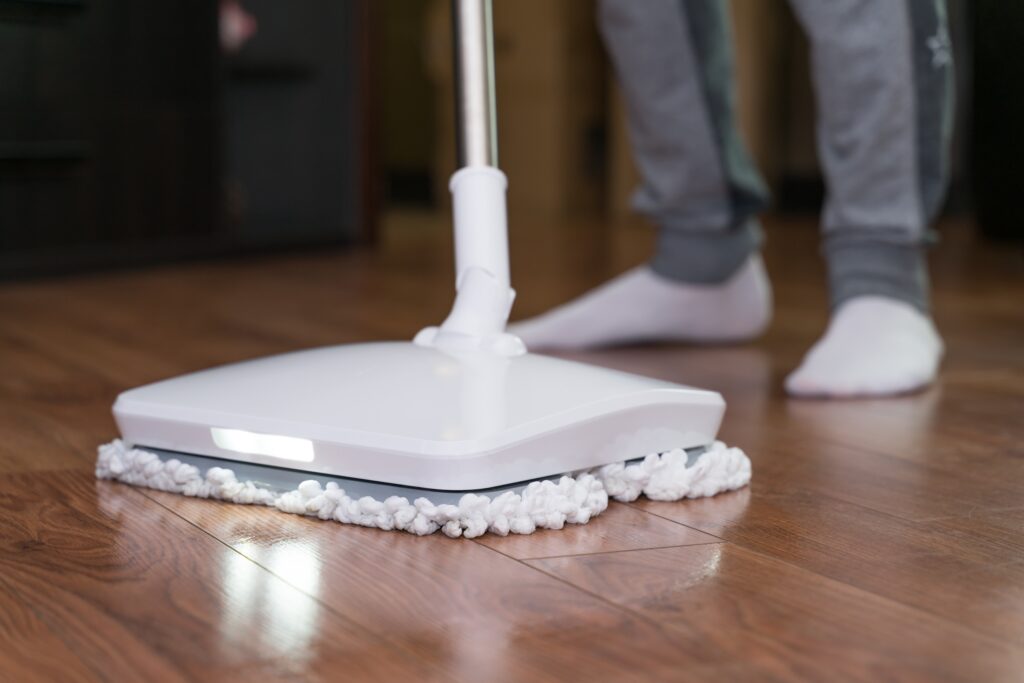
🚫 Never soak hardwood floors or use steam mops. Excess moisture can seep into the wood and cause warping or cupping.
4. Choose the Right Hardwood Floor Cleaner
The best cleaner is one specifically designed for hardwood floors.
Safe options include:
- pH-neutral hardwood floor cleaners
- Manufacturer-recommended products
- DIY solution: a small amount of hardwood cleaner diluted in water
🚫 Avoid:
- Vinegar or ammonia
- Bleach or harsh chemicals
- Oil soaps or wax-based cleaners (unless specified by the manufacturer)
These products can dull the finish and cause long-term damage.
How to Remove Spills, Stains & Sticky Residue
5. Clean Spills Immediately
Water, pet accidents, and spills should be wiped up right away using a soft cloth.
For sticky residue:
- Use a damp microfiber cloth
- Apply gentle pressure
- Dry the area immediately
Never allow liquids to sit on hardwood floors.
6. Dealing with Tough Spots
For stubborn spots like dried spills or scuffs:
- Use a hardwood-approved cleaner
- Gently rub with a microfiber cloth
- Avoid scrubbing pads or steel wool
Preventing Dirt & Damage Before It Happens
7. Use Rugs and Mats Strategically
Place rugs or mats:
- At entryways
- In kitchens
- In high-traffic hallways
This reduces dirt buildup and protects the finish.
8. Protect Floors from Furniture & Shoes
- Use felt pads under furniture legs
- Avoid dragging furniture
- Remove high-heeled shoes indoors
These small habits dramatically reduce scratches.
Humidity Control: A Hidden Cleaning Secret
9. Maintain Proper Indoor Humidity
Hardwood floors perform best when indoor humidity stays between 30% and 50%.
In dry climates (like Arizona):
- Use a whole-home humidifier
- Avoid drastic temperature changes
Proper humidity prevents gaps, cracking, and shrinkage.
How Often Should You Deep Clean Hardwood Floors?
- Daily: Dust mop or sweep
- Weekly: Vacuum
- Bi-weekly: Light damp mop
- Every 3–5 years: Recoat or refinish (depending on wear)
Over-cleaning can be just as harmful as neglect.
Professional Hardwood Floor Cleaning & Maintenance
While regular cleaning is DIY-friendly, professional services help with:
- Deep cleaning
- Recoating worn finishes
- Scratch repair
- Long-term floor protection
Professional care extends the life of your hardwood floors and preserves their value.
Conclusion
The best way to clean hardwood floors is simple, gentle, and consistent. Dry cleaning daily, damp cleaning sparingly, and avoiding harsh products will keep your floors looking beautiful for decades. Combined with preventative care and proper humidity control, hardwood floors remain one of the most durable and valuable flooring options for any home.
When in doubt, always follow manufacturer recommendations or consult a professional hardwood flooring expert to avoid costly mistakes.
FAQs
What is the best cleaner for hardwood floors?
A pH-neutral cleaner specifically designed for hardwood floors is the safest and most effective option. Avoid vinegar, bleach, or ammonia.
Can I use water to clean hardwood floors?
Yes, but only sparingly. Use a damp microfiber mop, not a wet mop, and dry the floor immediately to prevent moisture damage.
How often should hardwood floors be mopped?
Hardwood floors should be lightly damp-mopped every 1–2 weeks, depending on foot traffic and dirt buildup.
Are steam mops safe for hardwood floors?
No. Steam mops force moisture into the wood and can cause warping, cupping, and finish damage.
How do I keep hardwood floors shiny?
Regular dusting, proper damp cleaning, and occasional professional recoating help maintain shine without damaging the finish.